
Evaluating Bayesian Borrowing Methods for Treatment Effect Extrapolation: A Simulation-Based Study

At ISPOR Europe 2025, Marie Génin and Antoine Movschin presented Quinten Health’s large-scale simulation study assessing Bayesian borrowing methods for extrapolating treatment effects from a source population to a target population. These methods are particularly relevant in paediatrics, rare diseases, and small-population contexts where direct evidence generation is difficult. Poster presented by Marie and Antoine […]
Comparative Evaluation of Sequence-Encoding Strategies for Clustering Inhaled Therapy Pathways in COPD Patients Using Real-World Data

At ISPOR Europe 2025, Marie Génin presented Quinten Health’s study comparing three sequence encoding strategies for clustering inhaled therapy pathways in COPD patients based on real-world data from CONSTANCES linked to SNDS. Marie Génin presenting Quinten Health’s poster at ISPOR Europe 2025. Why Encoding Matters COPD treatment pathways are complex and heterogeneous. Machine-learning algorithms require […]
Development of an AI-Powered Tool to Accelerate and Enhance Systematic Literature Reviews for Evidence-Based Decision-Making in Clinical Research

Accelerating Systematic Literature Reviews with an AI-Powered Screening Tool At ISPOR Europe 2025, Paul Loustalot from Quinten Health presented a new AI-powered tool designed to accelerate and enhance systematic literature reviews (SLRs) by semi-automating title and abstract screening. The tool enhances efficiency while preserving the scientific rigor required in evidence-based clinical research. Paul Loustalot presenting […]
Comparing Individualized Treatment Effect Inference Methods Through a Simulation Study

At ISPOR Europe 2025, Antoine Movschin presented Quinten Health’s simulation-based comparison of machine-learning approaches for estimating individualized treatment effects (ITE). As healthcare increasingly relies on real-world data and personalized medicine, robust estimation of patient-level treatment effects is essential for research, clinical practice, and HTA decision-making. Antoine Movschin presenting the poster at ISPOR Europe 2025. Why […]
An AI-Powered Tool to Identify and Assess Fit-for-Use Registries for Drug Development and Evaluation

At ISPOR Europe 2025, Quinten Health introduced an AI-powered tool, a deliverable of the More-EUROPA consortium, designed to make real-world data discovery faster, smarter, and more transparent, supporting regulators, HTA bodies, and researchers to identify, assess, and select fit-for-use registries for evidence generation across the drug and product development lifecycles. Leveraging AI to Identify and […]
A New Regulatory-Grade Chronic Disease Cohort Simulator: Leveraging the Large, Deep, and Long Constances Cohort Linked and Matched to the SNDS in France

Quinten Health presented at ISPOR Europe 2025 a new regulatory-grade chronic disease cohort simulator built from the CONSTANCES cohort linked and individually matched to the French SNDS. This unique data asset provides an unprecedented foundation for generating transparent, reproducible, and high-quality real-world evidence for HTA, regulatory assessment, and long-term disease modelling. Marie Génin presenting the […]
Adoption of statistical methods for recurrent events may offer benefits in future investigations in multiple sclerosis (MS) research and clinical trials – ECTRIMS 2024
Quentin Pilard (Senior Biostatistician) and David Herman (Biostatistician) are presenting our poster entitled “Analyzing Recurrent Events in Multiple Sclerosis: A Review of Statistical Models with Application to MSOAC Trial” at ECTRIMS 2024 (European Committee for Treatment and Research in Multiple Sclerosis) in Copenhagen, Denmark.
Machine learning achieves promising performance in early diagnosis of rare diseases
Delays in the diagnosis of rare genetic conditions such as acid sphingomyelinase deficiency (ASMD) highlight the necessity for diagnostic algorithms to help clinicians identify patients at high risk of such diseases. To address this, electronic health records (EHRs) and machine learning (ML) were used to develop an ASMD diagnostic algorithm, which achieved promising results. In […]
Enhancing Patient-Centered Decision-Making: Quinten Health’s contributions to the More-EUROPA Project
In efforts to push for the use of registry data to support patient-centered decision-making in regulatory and health technology assessment (HTA) processes, Quinten Health, expert in AI and data science for healthcare, is taking part in two work packages (WP) within the More-EUROPA consortium. The first is to assess the level of evidence and uncertainty around the use of registry data for pre-licensing exploratory objectives; and the second is leading the design of an automated tool to identify, select and assess fit-for-purpose registries and data elements.
AIOLOS project’s Minimum Viable Product (MVP) showcased at ISPOR EU 2023
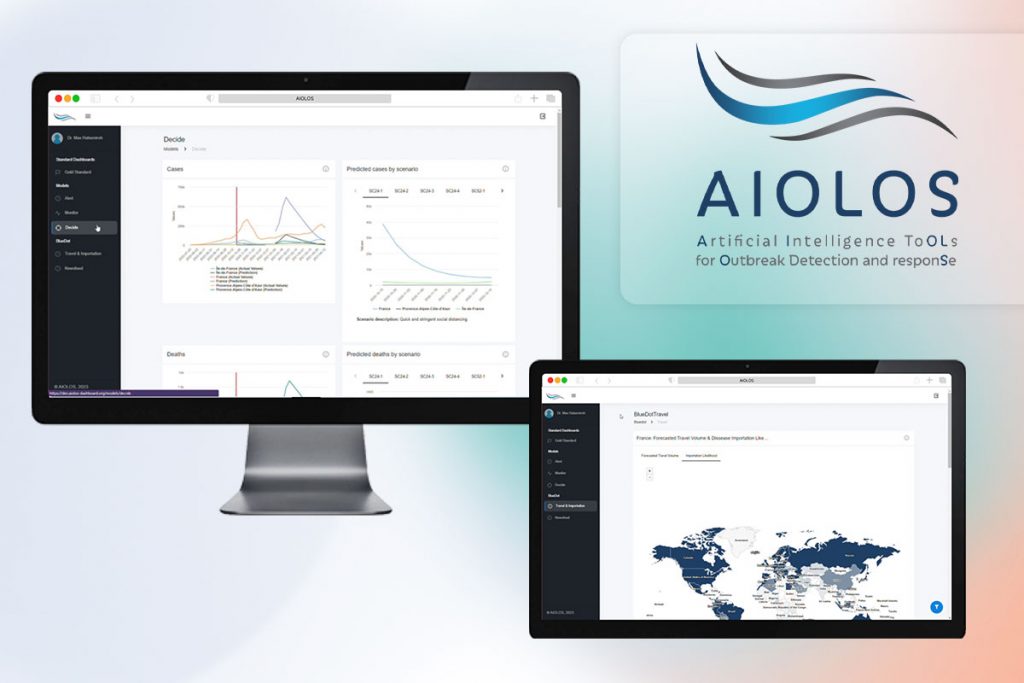
We had the occasion to highlight the collective initiatives of the AIOLOS project with an informative poster at ISPOR Europe 2023. This poster aims to provide an overview of the accomplishments achieved within the first year, presenting the successful development of a Minimum Viable Product (MVP).